
July 16, 2025
FROM WASTE CRISIS TO INFRASTRUCTURE OPPORTUNITY: HOW EPR STATES CAN TURN PLASTIC WASTE INTO INFRASTRUCTURE SOLUTIONS
Over the last two decades, Western states like California, Oregon, and Washington have led the way in environmental policy. Today, these same states are facing a critical challenge—and a rare opportunity—at the intersection of plastic recovery and infrastructure investment.
With Extended Producer Responsibility (EPR) legislation now in effect or actively under development across much of the West, the question is no longer whether more plastic will be recovered.
The question is:
Where will it go?
The End Market Dilemma
For years, states relied heavily on exporting plastic waste—much of it to Asia. But after China’s National Sword policy and similar measures across Southeast Asia, that market has effectively closed.
Meanwhile, EPR laws are mandating the collection and processing of more plastic than ever. However, without stable domestic markets, the entire system risks collapse. As Greg Janson, CEO of Triton, puts it:
“There’s no reason to recover it if you don’t have the market. It’s not a chicken-and-egg scenario—market demand has to come first.”
This disconnect between policy ambition and market reality threatens to undermine progress unless states rapidly develop responsible, domestic end markets that can absorb large volumes of difficult-to-recycle plastics.
Composite Rail Ties: A Proven, Scalable End Market
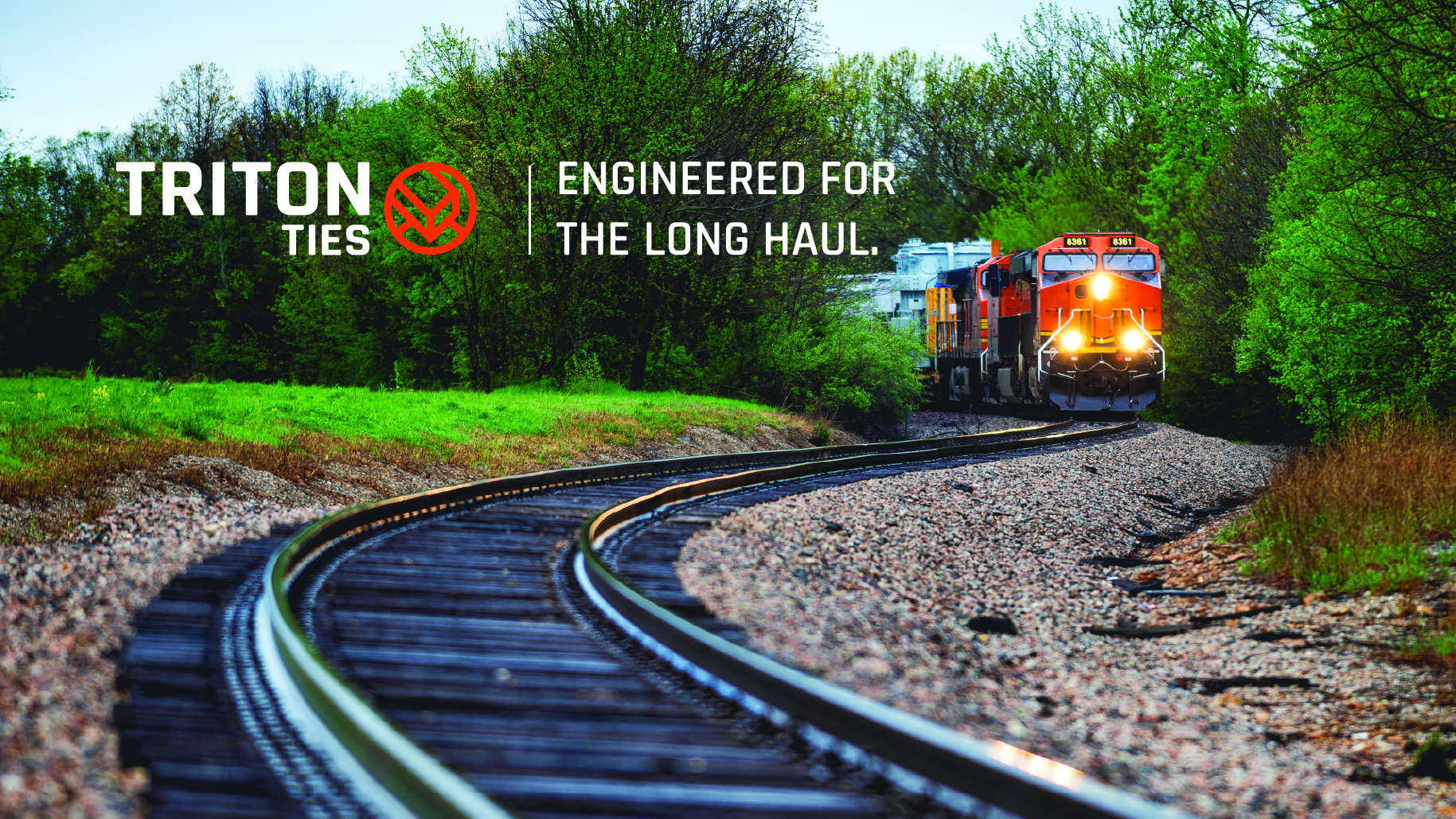
At Triton Group, we’ve developed one of those end markets—composite rail ties made from post-consumer plastic and virgin glass fiber. Our ties are:
◆ Made from a broad mix of recovered HDPE, LDPE, and PP
◆ Reinforced with virgin glass fiber for exceptional strength
◆ Designed to replace creosote-treated wood ties, especially in accelerated decay zones like the Pacific Northwest and the humid Southeast
Every mile of track installed with composite ties represents:
✔ 800 hundred mature, hardwood trees not cut down
✔ 250,000 pounds of landfill-bound plastic put to long-term use
✔ Elimination of 7,400 gallons of creosote, a tar-based preservative with environmental liability
Why This Matters for EPR Implementation
Western states need proven, large-scale infrastructure applications that can consume diverse and challenging plastic waste streams—not just specialty-grade recyclables. Composite ties are uniquely suited to this role.
Unlike package-to-package recycling, composite rail ties can tolerate:
◆ Wide range of melt flows
◆ Color and olefin polymer variability
◆ Polymers from challenging streams like agricultural film and large mixed rigid plastics
In short: we don’t need perfect plastic. We need real-world post-consumer input.
That makes Triton’s solution one of the most realistic and shovel-ready options to support the goals of EPR.
Policy Levers That Could Accelerate Adoption
While composite ties offer lifecycle savings over wood, the initial unit cost is higher—much like a composite deck costs more up front than cedar, but saves dramatically over time.
To help unlock this end market, states and EPR organizations could consider:
✔ Procurement incentives or mandates for recycled-content infrastructure
✔ Subsidies or credits to help close the price gap on the front end
✔ Grant funding for installation pilots on public or short-line rail
✔ Certification of composite ties as a “responsible end market” under EPR frameworks
Greg Janson explains it clearly:
“You want to stimulate supply? Start with demand. Secure long-term contracts with manufacturers like us. Build out the infrastructure. The supply will come.”
A Circular Future Starts With Track-Ready Plastic
Western states have always been at the forefront of sustainability. With the right policy support and industry partnerships, they can now lead again—by transforming the EPR challenge into an infrastructure solution.
Triton is ready to help.
Let’s turn plastic waste into long-term value—one composite rail tie project at a time.
Contact us at Triton Group to discuss procurement partnerships, supply agreements, or pilot installations in your state.